 Diocese of Parañaque

Mga kapatid, tayo ay pinili ng Diyos upang magpahayag ng Mabuting Balita.
Sa ikaapat na linggo ng panahon ng Laetare Sunday inaanyayahan tayo ng Simbahan sa isang sandali ng kagalakan sa gitna ng panahon ng Kuwaresma. Ang salitang Laetare ay mula sa Latin na nangangahulugang “magalak.” Kaya ang kasuotan ng pari ay kulay rosas o pink—isang tanda na sa gitna ng ating pagpepenitensya, pagdarasal, at pagkakawanggawa, naroroon pa rin ang pag-asa at kagalakang nagmumula sa pangako ng muling pagkabuhay ni Kristo.
Sa unang pagbasa, makikita natin ang isang mahalagang aral tungkol sa paraan ng pagpili ng Diyos. Nang ipatawag ni Samuel ang mga anak ni Jesse, inakala niya na ang magiging hari ng Israel ay yaong may kahanga-hangang anyo o lakas—ayon sa pamantayan ng mundo. Ngunit ipinakita ng Diyos na ang Kanyang pagtingin ay iba sa pagtingin ng tao. Hindi ang panlabas na anyo ang Kanyang batayan, kundi ang puso. Kaya ang pinili ng Diyos ay si David ang anak na hindi man lamang ipinaharap kay Samuel at naiwan lamang upang mag-alaga ng mga tupa.
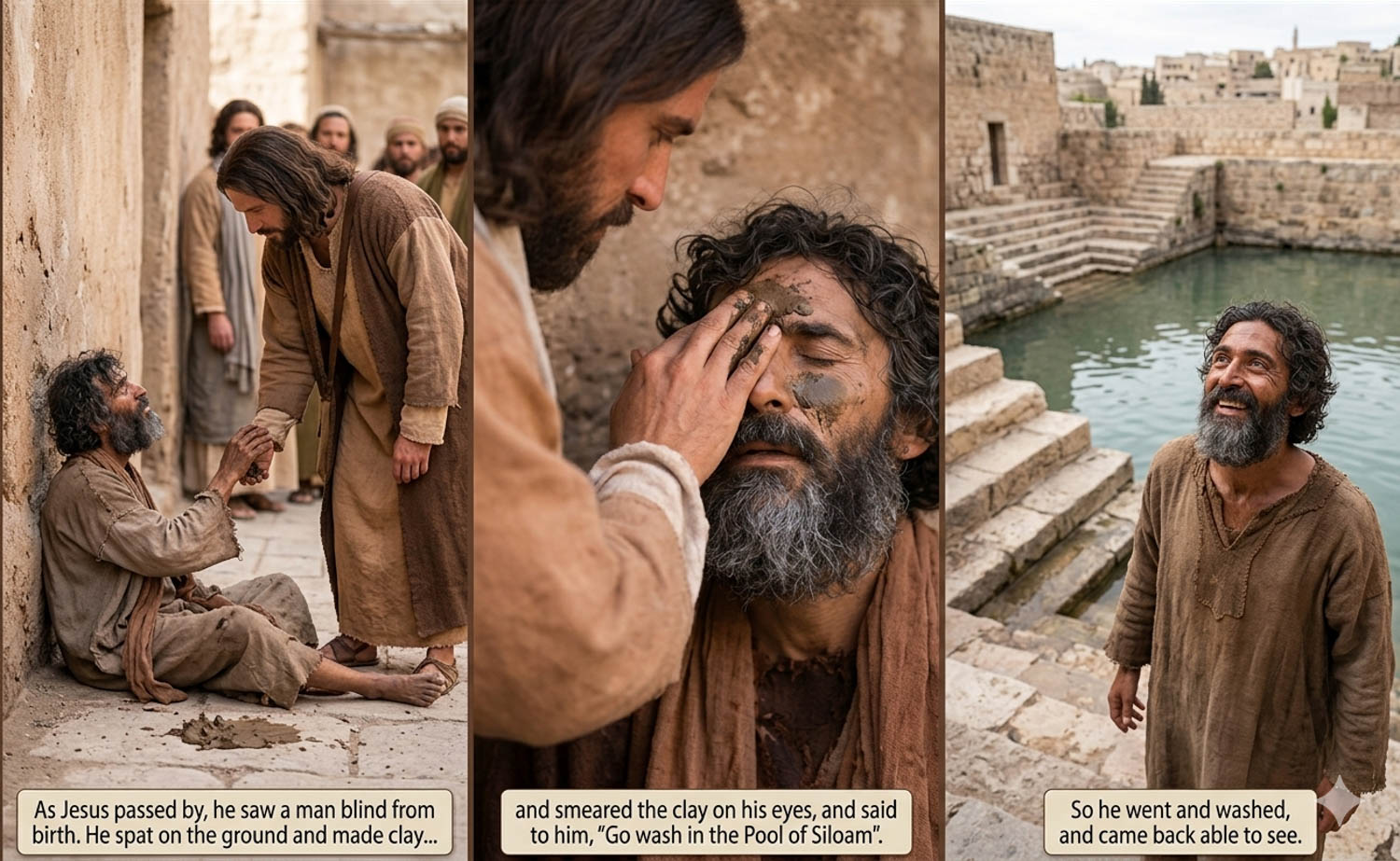
Sa Ebanghelyo naman, narinig natin ang kuwento ng lalaking ipinanganak na bulag na pinagaling ni HesuKristo. Ang kanyang karanasan ay hindi lamang pisikal na pagkabulag, kundi isang larawan ng mas malalim na katotohanan—ang espirituwal na pagkabulag ng tao. Sa mata ng lipunan, siya ay walang halaga: isang pulubi, isang taong hindi pinapansin at hindi pinaniniwalaan.
Subalit sa kilos ni Hesus, ang lalaking ito ay hindi lamang pinagaling; siya ay naging saksi. Ang dating bulag ay naging tagapagpahayag ng katotohanan tungkol kay Hesus. Sa ganitong paraan, ang itinuring na walang halaga ng mundo ay pinili ng Diyos upang ihayag ang Kanyang kapangyarihan.
Mga kapatid, ang karanasang ito ay sumasalamin din sa ating buhay. Madalas tayong nagiging bulag sa mga biyaya ng Diyos. Iniisip natin na hindi tayo karapat-dapat dahil sa ating mga kasalanan at pagkukulang. Minsan ay nakararanas tayo ng paghamak o pangungutya kapag pinipili nating magbago at lumakad sa tamang landas.
Ngunit ang paanyaya ng Salita ng Diyos sa Linggong ito ay malinaw: buksan natin ang ating mga mata sa biyayang ipinagkakaloob ng Diyos sa ating buhay. Sapagkat tulad ng pinili si David, at tulad ng lalaking ipinanganak na bulag na naging saksi ni Kristo, tayo rin ay tinatawag upang ipahayag ang kadakilaan ng Diyos.
Kaya sa gitna ng ating paglalakbay sa Kuwaresma, nawa’y maging bukas ang ating mga mata at puso upang tanggapin ang liwanag ni Kristo, at maging mga saksi ng Mabuting Balita sa ating kapwa. Amen.
~ FR. JAY
In today’s Gospel, the Lord Jesus healed a man born blind. But before the healing, the disciples asked a question whether the cause of the man’s blindness was his own sin or the sins of his parents. The Lord said neither of them but it was for the purpose that the glory of God may be revealed through his suffering and eventually in his healing.
The Lord Jesus healed using the mud, a reminder of the creation of humanity. But the man needed to wash himself in the Pool of Siloam. This is a test of the man’s obedience, participation and persistence. The man gained his sight and he identified the Lord clearly from being a simple man to a prophet and at the end, the Lord to be worshipped.
On the other hand, the Pharisees who were not blind, refused to see the Lord healing this man born blind. The sign was already in front of them but they chose not to recognize it because of their pride and their spiritual blindness.
All of us have prejudices, pride, or past hurts that block our vision. Some of us do not allow the Light to lead us to sight because we are thinking that we see clearly on our own. The sense of sight can only be very useful if we have the true Light in our life, our Lord Jesus Christ. And it is not only about our eyes that we see the Lord. It is about our hearts which see and recognize the Lord healing our spiritual blindness so that by really seeing the Light, we come to Him and worship Him.
~ FRA. RONEL
BUT NOW… BECAUSE OF HIM… I SEE.
There are moments in life when I feel like I am standing on the side of the road – visible to many yet truly seen by none. The man born blind in John 9 lived that reality every day. People noticed his condition, discussed it, debated it yet no one paused long enough to understand his heart. But Jesus did something strikingly different: He saw him. Not the disability, not the assumptions, not the labels others forced on him – but the person. And that truth softens something in me, reminding me that God sees beyond my circumstances and into who I really am.
When the disciples asked, “Who sinned?” I recognize my own hidden fears: Is my pain a punishment? Is my struggle my fault? Is something wrong with me? But Jesus’ answer reveals the gentleness of God’s heart: “This happened so that the works of God might be displayed in him.” Not to shame. Not to blame. But to reveal something holy. I realize that the very places I feel most fragile, broken, or ashamed may be the places God intends to demonstrate His glory.
When Jesus healed the man, He didn’t just restore sight; He restored identity. Light entered his eyes – and his confidence, his voice, and his story awakened. But healing also created conflict. It confronted pride, unsettled the comfortable, and exposed what religion could not heal. And the once‑silent man suddenly spoke with courage because he simply knew the truth of what Jesus had done. His testimony wasn’t polished; it was honest: “I was blind, but now I see.” What moves me most is what happened after the rejection: Jesus went looking for him. And I realize sometimes God allows me to walk through darkness so that when I step into the light, the first thing I truly see is Him.
And this becomes even more meaningful on Laetare Sunday – the Sunday of rejoicing in the midst of Lent. It is the Church’s gentle reminder that even in the long journey through sacrifice, repentance, and struggle, God’s light is breaking through. It is the promise that suffering is never the final word. Joy is already on the horizon. It tells me that God is at work even in what feels heavy, confusing, or painful. That rejoicing and suffering can coexist. That grace often grows in the soil of hardship. And that in the middle of my darkness, God is already writing a story of light. And this passage invited me into deeper sight, deeper faith, deeper relationship. And perhaps slowly, steadily, courageously I will learn to say with the same quiet certainty: I was blind in ways I never knew. But now… because of Him… I see.
~ m’jenn
PRAYER TO START THE WEEK
Lord Jesus, open our eyes so we can see Your presence in our daily lives. Help us recognize truth even when it is difficult and give us the courage to stand for what is right. Remove the blindness in our hearts and teach us to trust You more each day. Guide us so that our choices reflect Your light. Amen.
Originally published in the Neo Jeremiah Voice of the Young Prophet Newsletter (March 15, 2026 issue).