 Diocese of Parañaque


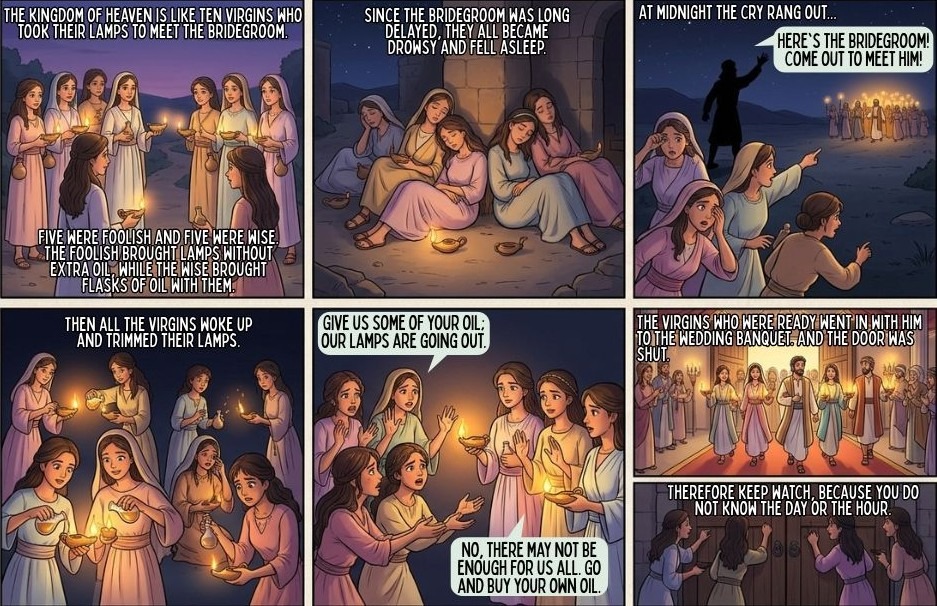
The Parable of the Wise and the Foolish Maidens is the first of three parables that conclude the Olivet Discourse of Jesus in Matthew 24-25. The discourse was triggered when the disciples of Jesus asked regarding on the destruction of the temple and on the signs of the coming of the Son of Man. Thus, the discourse was shifted from apocalyptic warning to ethical exhortation that made the parable functions as a reminder to be vigilant and be prepared for the imminent coming of the delayed eschatological event.
Moreover, the parable presents the detail of the historical wedding customs of first-century Palestine and turns it into a framework to describe the particular preparation when this eschatological event arrives. During this period, the weddings of the Jewish culture were a long week celebration of festivals. The young unmarried maidens (parthenoi), the friends of the bride were expected to wait the groom (nymphios), who would journey from the home of the family of the bride to collect her, frequently late at night following lengthy negotiations. When the groom arrived, everyone joined a torch-lit parade to the house of the groom for a grand feast. Hence, the term ‘lampades’ refers not to small oil lamps, but to large torches made of oilsoaked cloths wrapped around sticks, which required a backup supply of oil keep burning.
The theological message of the parable emphasizes the dual nature of the return of Jesus Christ – the Parousia, which is both certain to happen and completely unpredictable delay. Rather than treating the narrative as intricate allegory where every minute detail requires decoding, its primary focus serves as a stark reminder to remain constantly watchful, as the exact day and hour are entirely unknown. Likewise, true discipleship demands sustained, continuous spiritual preparation, symbolized by keeping a reserve of oil, rather than a fleeting, momentary burst of enthusiasm represented merely by carrying a lamp.
~ REV. VIRGILIO MA. SULTAN, JR., OSM
The verse tells us: “The five who were foolish didn’t take enough olive oil for their lamps, but the other five were wise enough to take along extra oil.” Ask yourself: are you getting ready because it matters to you or just because it benefits others?
In life, we all experience ups and downs. Through these moments, we learn that next time, we should be prepared. I believe that “one small step today is better than a thousand plans for tomorrow.” It is always better to be prepared than to regret not preparing at all.
I realized that preparing is not always easy. I learned this lesson myself back in high school — I used to just go with the flow and never worry about what tomorrow would bring. I failed my exams, and I realized it was my fault because I hadn’t studied, even when no announcement was made. I know that in my life, I have been both foolish and wise at different times — in my decisions, my actions, and how I treat myself and others. I have learned that being prepared benefits not just you, but also the people around you. When you prepare and end up not needing what you have, you can share it with those who do. Just remember: don’t give everything away. Always keep something for yourself even if it’s just a little. What may seem small to you could be a huge blessing to someone else. Help others because even the smallest act can make a big impact — even if you don’t see it right away.
Remember that every choice has consequences. Just as in the verse: when the foolish five returned with oil and knocked on the door, the Lord answered, “I do not know you.” We cannot always be certain that there will be a second chance, or that we can go back to where it all began so prepare well — for yourself first, and then for others.
~ SHAINA PAJARILLO
PRAYER TO START THE WEEK
Lord Jesus, keep our hearts awake and our faith burning brightly as we await Your coming. Teach us to remain faithful, prepared, and steadfast in prayer, even when the waiting becomes difficult. May our lives be filled with love and good works, so that when You come, we may joyfully welcome You into our hearts. Amen.
Originally published in the Neo Jeremiah Voice of the Young Prophet Newsletter (November 08, 2026 issue).