 Diocese of Parañaque

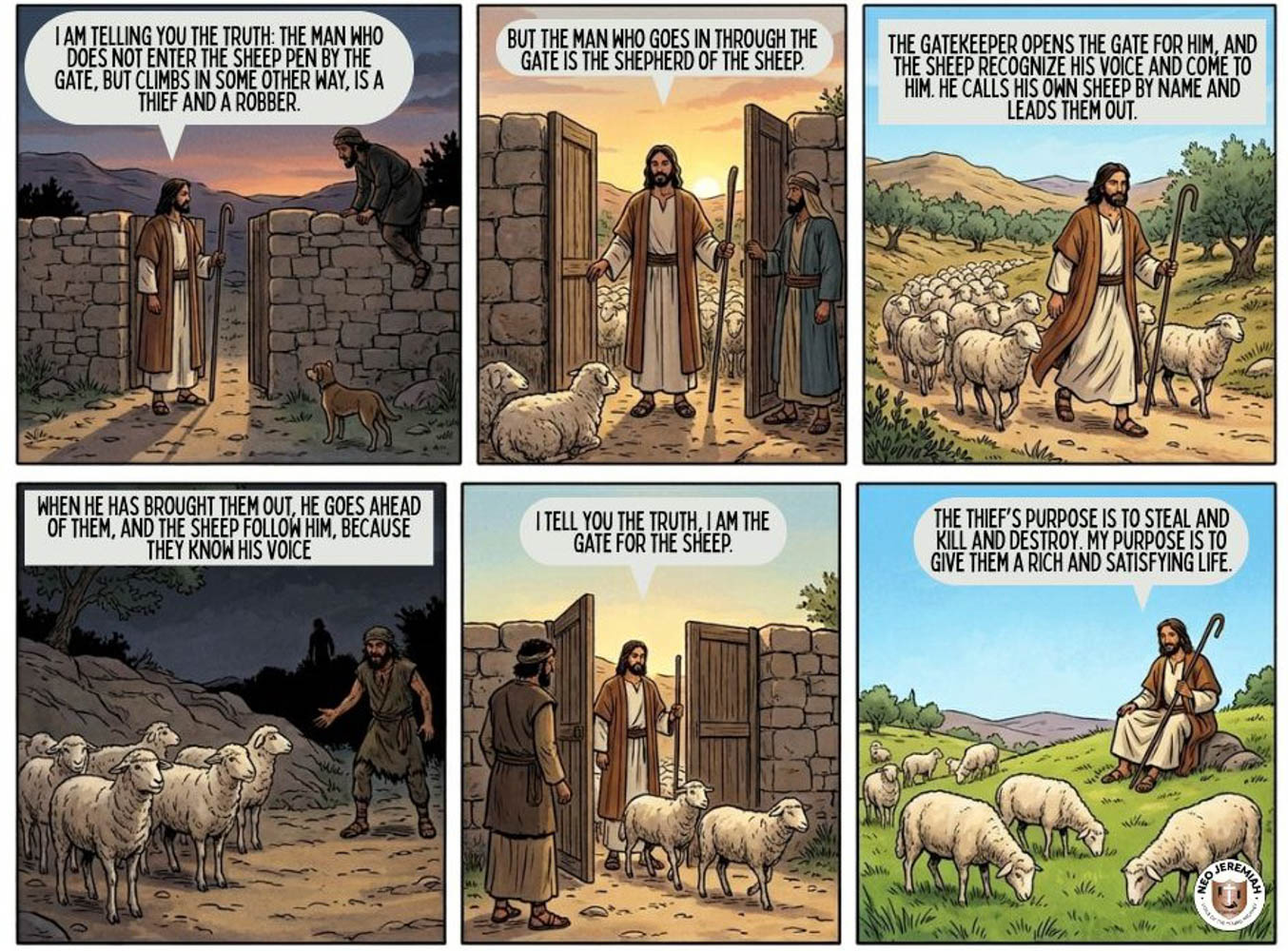
During the time of Jesus, sheep husbandry was fundamental in the economy of Israel, particularly in the hills and valleys of Judah and throughout Galilee. Shepherds had been raising fat-tailed sheep for meat, milk, wool, and temple sacrifices while living their lives like semi-nomadic people because they led the flocks in search of pasture and water. Under these circumstances, shepherds played a pivotal role in the economy of Israel and in shaping the religious life of its people. The culture of Israel evolved organically since in the Ancient Near East period, a time when leaders and kings were traditionally viewed as shepherds.
In John 10:1-10, Jesus is depicted as a Shepherd and Doorkeeper, two unitedly inseparable roles. In the cultural setting, the doorkeeper is the illustration of the shepherd who sits in the entrance of the “three season sheep pen,” it is a simple stone or brush enclosure used during spring, summer, and fall. Since the “three season sheep pen” had no physical door, the shepherd became the doorkeeper, and he could determine who passed into and out of the pen. The task of the shepherd was to keep the sheep in the pen, especially in the evening and at night. Moreover, the sheep knew and trusted their owner. When the stranger called the sheep, they moved away from the stranger. In this context, Jesus illustrated the difference between the bad and good shepherd so that his listeners would recognize him as the Good Shepherd but they did not understand him.
The shepherd metaphor was contextually profound and meaningful to the Jewish people listening to Jesus, called forth to their cultural and scriptural understanding of God as Shepherd. In the Old Testament, the patriarchs were shepherds; Moses tended the flocks of his father-in-law, and David likewise served as a shepherd.
The image of Jesus as a Good Shepherd has exhorted us to believe and listen to him because in him was life (Jn. 1:4). We have to trust the voice of Jesus as the Good Shepherd because he is the light of the world and whoever follows him will not walk in darkness but will have the light of life (Jn 8:12). Jesus meant for us a life of an unending presence with him because he already made himself a sacrificial offering as an expiation of our sins. Death has no power over him. In his death and resurrection, salvation becomes possible. Therefore, our faith to Jesus Christ and acts of goodness toward our neighbor becomes our daily response and vocation in this life.
“I am the good shepherd. A good shepherd lays down his life for the sheep.” – John 10:11
~ FRA VIRGILIO MA. SULTAN, JR., OSM
In this gospel, I realized that Jesus is the true Good Shepherd who guides, protects, and leads His people with love. His sheep follow Him because they recognize His voice and trust Him.
As a student, I can relate this to my experience as a leader in group activities. I noticed that the way my groupmates act and perform their tasks often depends on how I lead them. If I guide them well, they are more likely to do their work properly. Sometimes, there are members who take initiative, but most of the time, they follow what is asked of them. This made me realize that leadership carries a big responsibility, because the outcome of our work reflects how a leader handles the group.
So this gospel also reminds me that being a good leader is not just about giving instructions, but about caring for others, just like Jesus does. I should not only focus on results, but also on guiding my members with patience and understanding.
At the same time, I am also called to be like the sheep who listens to the Shepherd’s voice. If I follow Jesus and trust Him, He promises to lead me to a better life—one that is full and meaningful.
~ M. Rheyziel
“The one who enters by the gate is the shepherd of the sheep.“ This verse enlightened me because it reminds me that Jesus is always the way in everything. There is no other path to choose but Him. I realized that Jesus made great sacrifices just to free us from all the sins we committed. In return for His sacrifice, we must follow Him and His path, continuing what He started by spreading His words and sharing the blessings we have received.
In life, walking on the right path feels right. It is about being true to yourself. We need a Shepherd (Jesus) to help us choose and guide us to do what is right. Though sometimes we get lost, we have a map, which represents His word as our guide, to lead us back to the right road so we can reach our destination. Always trust in the Lord, and He will straighten your paths.
I realized that the Shepherd’s voice and the Stranger’s voice are just like choosing friends. The Shepherd’s voice represents having a friend who encourages you to do the right things and pushes you to achieve your dreams. This friend is always there to listen to all your problems and correct you when you are wrong. They will never judge you for who you are—even if you make a wrong decision, they will help you make things right.
Meanwhile, the Stranger’s voice represents a friend who encourages you to do bad things. They are the type who will get you into trouble and leave you when you are not in a good place in life. They are only there during good times, but when you need help, you will never hear from them. But in the end, we always end up with the one who’s been there since day one, and knows who you are—the one who will understand, forgive, and guide you.
~ Shaina
PRAYER TO START THE WEEK
Jesus, our Good Shepherd, help me recognize Your voice in the middle of all the noise and distractions in my life. Give me the courage to follow where You lead, even when it’s unfamiliar or challenging. Lead me to the life You promise, full, real, and rooted in Your love. Amen.
Originally published in the Neo Jeremiah Voice of the Young Prophet Newsletter (April 26, 2026 issue)