 Diocese of Parañaque

The Hidden Gesture of the Last Supper
The Last Supper, except for the Holy Eucharist, is the most important institution Jesus performed. The washing of the feet is of the significant gestures, but it was removed from the Mass. I believe it could be meaningful to have it during every Mass. Was it removed due to inconvenience or time constraints?
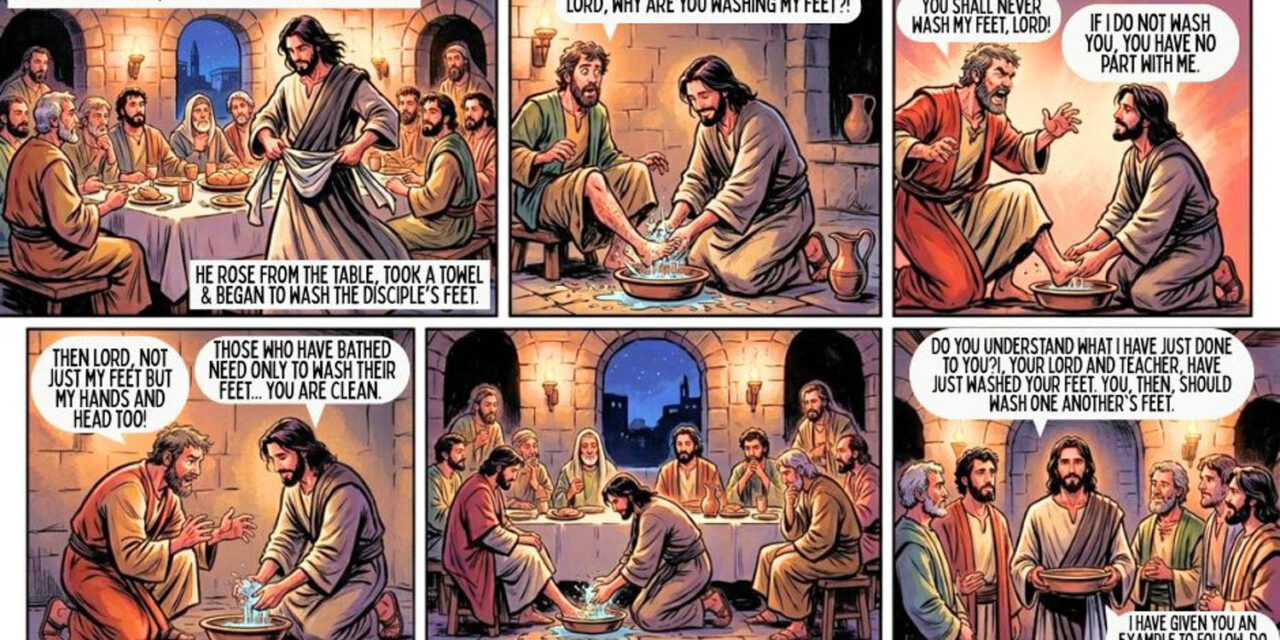
At the beginning of the Gospel, Jesus knew what to do, and His actions would render total self-giving love, anticipating the Cross.
Jesus: Rises from supper, lays aside garments, wraps a towel, washes feet. This deliberate reversal of roles—from Master to servant, from Lord to slave—is central to the Church’s teaching. Authority in the Church equals service, and discipleship requires imitating Christ’s humility. As Jesus said, “You call me Teacher and Lord… and you are right. Then: ‘I have given you an example.’” Jesus even required Peter, who self-humbled too much not to wash his feet, but Jesus said, “Unless I wash you, you have no share with me.” This means that participation in Christ requires Christ-like humility, and cleansing is not self-achieved but received. This whole point of washing means purification and points to: Baptism and Reconciliation that interiorize cleansing for communion.
And going back to my first question, why the washing of the feet is not included anymore every time we celebrate Mass when we heard Jesus commanded as to do the same.
The washing of the feet, a meaningful Catholic ritual, isn’t included in every Mass due to liturgical law, pastoral practice, and tradition. It’s optional and reserved for Holy Thursday’s Mass of the Lord’s Supper, highlighting its catechetical and symbolic value annually, not as a weekly or daily norm. Historically, it was a separate ceremony, and the rite requires selection of participants, preparation, and space.
John 13:1–15 teaches that: The true meaning of Christ’s glory is revealed not in power but in humble, self-giving love that serves—even to the point of death. And therefore: To share in Christ (Eucharist) is to become like Christ (service).
– FRIAR JUMZ
A Journey into Humble love…❤️
In the Gospel of John 13:1–15, I am struck by how intentional Jesus is. He knows who He is. He knows where He is going. And still, He kneels.
He rises from the table, sets aside His garments, takes a towel, and begins to wash the feet of His disciples. This is not just humility—it is a love that lowers itself completely. A love that does not cling to status, but chooses service. And I ask myself: how often do I resist this kind of love? How often do I want to be served, noticed, affirmed… instead of quietly giving myself?
Peter’s reaction feels so familiar to me. “Lord, you shall never wash my feet.” There are moments when I feel unworthy, when I would rather hide my weakness than let Jesus come close. But His response pierces my heart: “Unless I wash you, you have no share with me.”
I realize then, discipleship is not just about serving like Christ, but first allowing myself to be loved, cleansed, and humbled by Him. It is not something I achieve. It is something I receive. And maybe this is why the washing of the feet is not done in every Mass. Because its meaning is not meant to remain as a ritual alone, it is meant to be lived daily. Every Eucharist I receive calls me into that same movement of love: to become what I receive. To be broken. To be given. To serve.
As a woman, I see this in the ordinary rhythms of life, in caring for others, in choosing patience, in forgiving quietly, in loving even when it is not returned. These become my “washing of the feet” moments. Hidden. Unseen. But deeply real.
Holy Thursday reminds me that true greatness is not in being above others, but in kneeling before them with love. And perhaps the real question is not why the ritual is not always present in the Mass… but whether I am willing to live it beyond the Mass.
“Lord, wash me. And teach me to love like You.”
– Leng
PRAYER THIS HOLY WEEK
Lord Jesus, as we journey with You this Holy Week, help us to walk in humility, love, and faithfulness, even in our struggles. May we recognize Your sacrifice and allow it to transform our hearts. Grant us the grace to follow You more closely, sharing Your mercy with all we meet. Amen.
Originally published in the Neo Jeremiah Voice of the Young Prophet (April 2, 2026 issue).