 Diocese of Parañaque

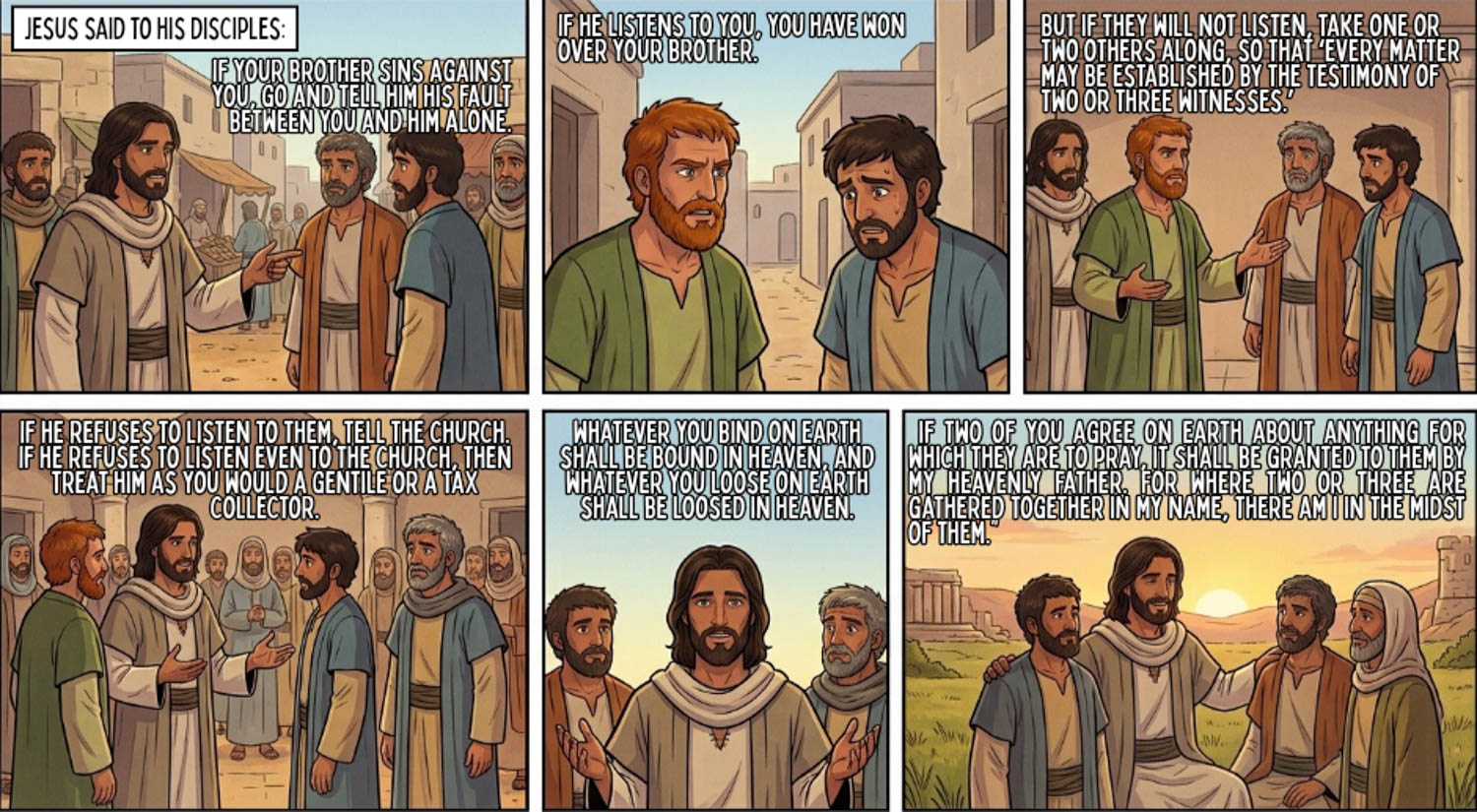
In the Gospel, the Lord Jesus provides a communal way of addressing conflict and reconciliation. This way of the Lord balances the dignity of the persons involved, accountability, and restoration.
The process initiates privately to secure the offender’s honor and prevent public shame. If unresolved, the conversation expands to include two or three witnesses to ensure fair, impartial discernment. The issue is brought to the wider community only if these attempts to settle it fail. If refusal persists, the Lord directs treating the person as “a Gentile and a tax collector.”
The assurance that the Lord is present wherever “two or three gather” guarantees that He inhabits the work of peacemaking amidst conflicts or disputes. He is the source of unity amidst division and he restores broken relationships.
The Gospel directly speaks to our Filipino values of pakikisama and hiya. Often, out of a desire to avoid direct confrontation, conflicts are handled through tsismis, parinig or pahiwatig. While these habits stem from protecting surface harmony, they often leave wounds not healed and they even add to the conflict at hand. The Lord Jesus’ call to go directly to a brother or sister protects their honor while addressing the grievance head-on. Reconciliation is restoring our pakikipagkapwa, our good relationship with each other. Furthermore, in our community, we are responsible to be peacemakers and kindhearted kapwa-tao. The promise that the Lord is present when “two or three gather” reassures us that when we set aside pride to practice honest, compassionate accountability, God meets us right in the middle of our relational struggles.
~ FRA. RONEL MA. ADVINCULA, OSM
Sometimes, the Hardest Step Is to Start the Conversation
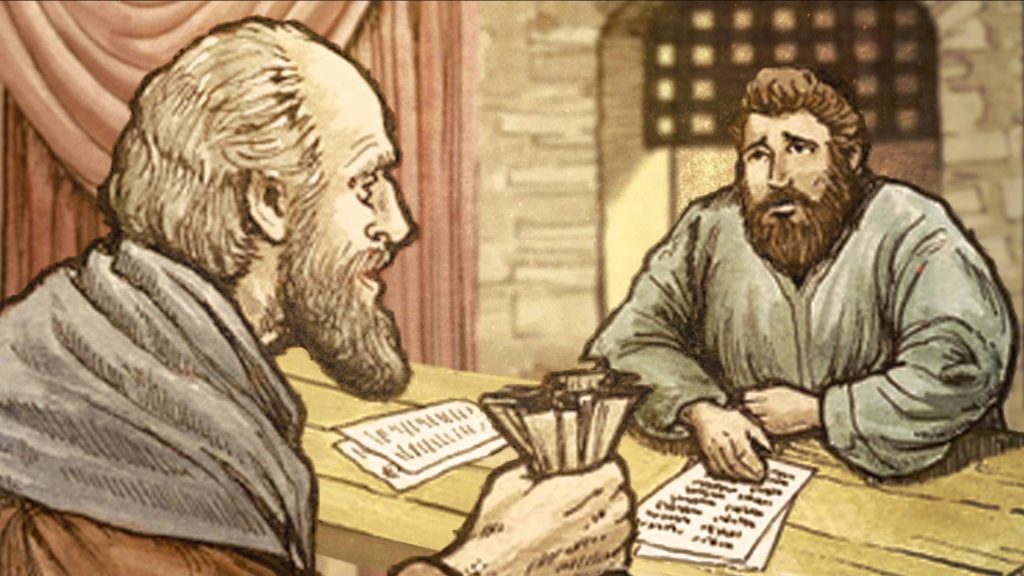
There was a time when I experienced being misunderstood by someone I cared about. I wanted to explain myself, but instead of talking, I chose to stay quiet. I told myself, “Maybe it’s better not to say anything.” But the truth was, I was hurt. The more I kept everything to myself, the more I overthought the situation. A simple misunderstanding slowly became distance, and the person I once felt comfortable with became someone I was afraid to approach.
This Sunday’s Gospel reminds me that Jesus does not want us to run away from difficult relationships. He tells us, “If your brother sins against you, go and tell him his fault between you and him alone.”
At first, this sounds difficult. Why should I be the one to approach? Why should I start the conversation when I was the one who got hurt?
But Jesus teaches me that reconciliation is not about proving who is right. It is about choosing what is more important: the relationship, peace, and love.
I realized that sometimes I expect people to understand what I feel without actually telling them. I expect them to apologize without giving them the chance to know that they hurt me. And sometimes, because of pride, I would rather lose someone than take the first step.
In real life, we encounter this everywhere—in our families, friendships, workplaces, and even relationships. One misunderstanding can become a silent war if nobody is willing to speak.
Jesus challenges me to have the courage to say, “Let’s talk. I don’t want us to remain like this.”
Maybe forgiveness does not always begin with a big apology. Sometimes, it begins with a simple message, a sincere conversation, or the humility to take the first step. Perhaps this week, Jesus is asking us: Who is the person I need to reach out to?
~ Rence Rence
PRAYER TO START THE WEEK
Lord, give us hearts that seek healing rather than revenge and reconciliation rather than division. Teach us to speak the truth with love and to forgive with humility. May You always be at the center of our friendships, families, and communities. When we gather in Your name, remind us that we are never alone. Amen.
Originally published in the Neo Jeremiah Voice of the Young Prophet Newsletter (September 6, 2026 issue).